What to see at the Musée du quai Branly
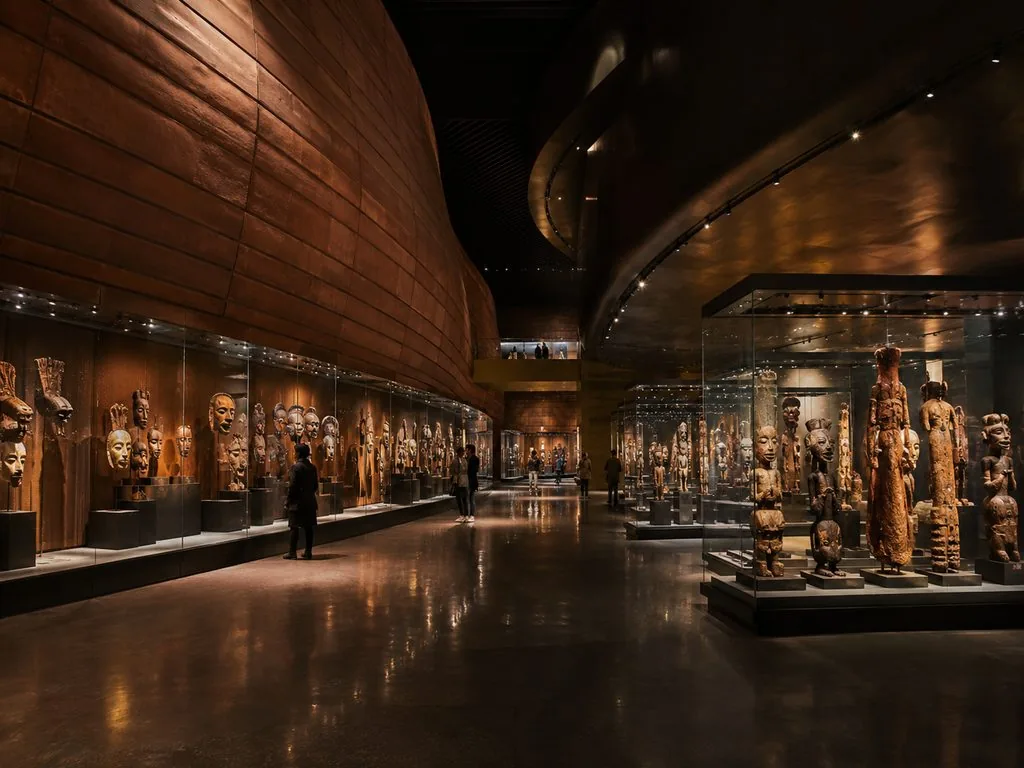
At a glance
- On display ~3,500 works from a 370,000-object collection
- Order of the plateau Oceania → Asia → Africa → Americas
- The way in A curved ramp with a projected “river” of words
- Exhibitions Mezzanines above the plateau, garden-level gallery
- Photography Without flash, generally fine in the permanent collection
- Also at the Louvre ~100 quai Branly masterpieces in the Pavillon des Sessions
The first thing to understand about the quai Branly is that there are no rooms. Jean Nouvel’s building puts the whole permanent collection on one long, dim, curving floor, and the continents flow into each other with leather-clad partitions rather than walls. It is a wonderful thing once you have got your bearings and a mildly disorienting one before that. Take the free map at the desk. Then follow the order below, which is the order the plateau was built for.
The ramp
After security and the ticket check you climb a long spiral ramp to the plateau. Along the floor runs a projected “river” of words in many languages, drifting downhill against your direction of travel. Visitors divide on it. Children love it, some adults find it a theme-park touch, and I have come round to it after years of watching people slow down and read. Either way it is the one part of the visit you cannot skip, so let it set your pace.
Oceania
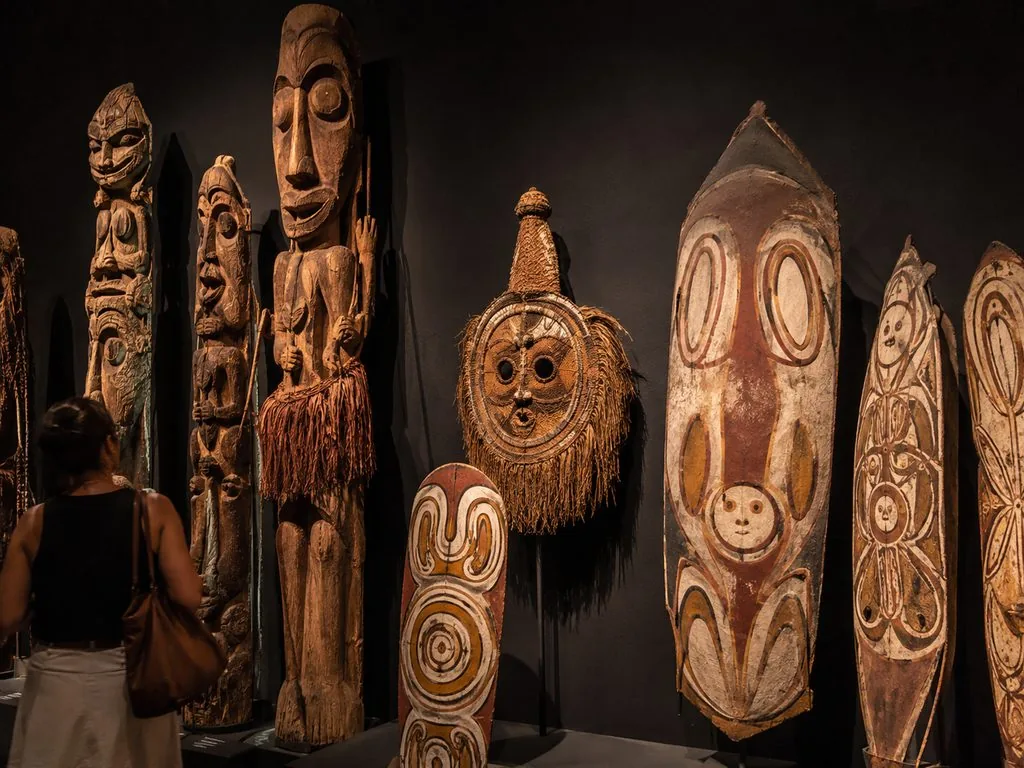
You arrive on the plateau in the Pacific, and it is the section I would send anyone to first. The Papuan ancestor poles and carvings are tall enough to need the full ceiling height, and the Rapa Nui (Easter Island) figures are smaller and stranger than photographs suggest. Look for the Torres Strait headdresses, the Aboriginal bark and dot paintings, and a Māori meeting-house element. I have a soft spot for this section and it shows in how long I stand here, so budget accordingly.
Asia
Asia is the quietest stretch of the plateau, partly because visitors expecting Chinese porcelain find something else entirely. The holdings lean towards the edges of the continent: Japanese Noh masks and Ainu objects, Tibetan thangkas, Vietnamese ceremonial bronzes, Indonesian shadow puppets and Dayak textiles. The musical instruments that fill the glass tower at the centre of the building are largely from here and from Africa. A short, dense section worth twenty unhurried minutes.
Africa
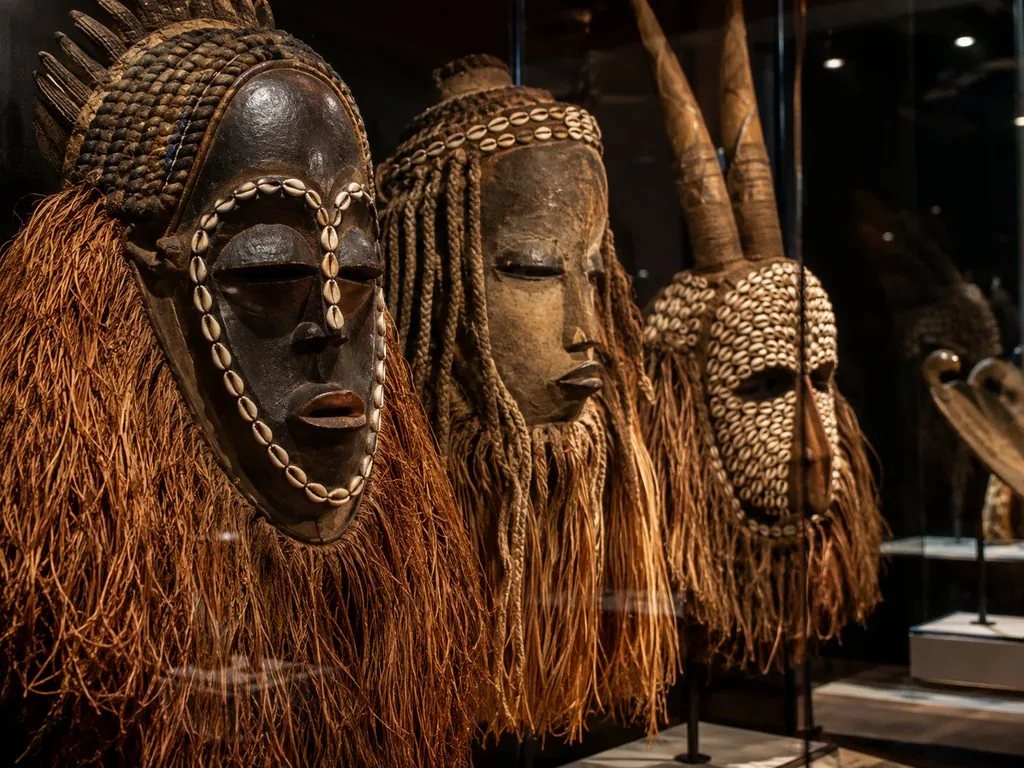
Africa is where most first-time visitors spend the longest, and where the museum’s reputation was made. The Benin bronze plaques are the anchor. Around them are Dan masks from Côte d’Ivoire, Kuba royal textiles, Ethiopian processional crosses and cases of southern-African beadwork. This is also the part of the collection most touched by the restitution discussions of the past few years, and the labels are more careful than they were when I started bringing schools here.
The Americas
The plateau ends in the Americas, which is a pity because by now many visitors are tired. Pace yourself for the pre-Columbian gold and ceramics from Peru, Mexico and Colombia, the Amazonian featherwork, which is the brightest thing on the whole floor, the Plains regalia, the Inuit ivory and the Nazca and Wari textiles. If you are doing a 90-minute visit, this is the section to sacrifice; if you have half a day, save fifteen minutes for the textiles alone.
The mezzanines and the garden gallery
Temporary exhibitions occupy mezzanines above the plateau and a gallery at garden level. The admission ticket includes them, though some require a free timed reservation, and the mix changes through the year; the 2026 exhibitions page has the current dates. Ana Lucia, reviewing the ticket, counted three good temporary shows on her visit, which is about typical.
Beyond the galleries
The Théâtre Claude Lévi-Strauss, a cinema, the Salon de lecture Jacques Kerchache, a médiathèque and a bookshop are all in the building. Outside, the garden and the green wall are free and worth a slow lap. And a note for completists: about a hundred masterpieces from the quai Branly collection hang in the Pavillon des Sessions at the Louvre, on a separate Louvre ticket. They are the pieces chosen to argue that these objects are art, and they make the argument well.
Photography without flash is generally fine in the permanent collection, and the low light rewards a steady hand rather than a phone held at arm’s length. Leave the tripod at home; bulky objects are refused at security.
Frequently asked questions
What is the theme of the Musée du quai Branly?
The arts and civilisations of Africa, Asia, Oceania and the Americas, from the Neolithic to the twentieth century. In its own words it is not a “primitive art” museum but a museum of four continents; the history page explains how that framing came about.
Which objects should I not miss?
I would not use that phrase, but the pieces people remember are the Papuan ancestor poles and Rapa Nui figures in Oceania, the Benin bronze plaques and Dan masks in Africa, and the Amazonian featherwork and pre-Columbian gold in the Americas. Allow two to three hours to see them properly.
Are the temporary exhibitions included in the ticket?
Yes, the admission ticket covers the permanent collection and the temporary exhibitions. A few shows need a free timed reservation on top, which applies even to free-entry visitors; see the 2026 exhibitions page.
Can I take photographs?
Without flash, generally yes in the permanent collection. Rules can differ in temporary exhibitions, so look for the sign at the entrance to each one.
Is the quai Branly collection also at the Louvre?
Part of it. The Pavillon des Sessions at the Louvre shows about a hundred masterpieces from the quai Branly collection on a separate Louvre ticket. The Paris Museum Pass covers both; see the pass review.